How Fishing Games Work
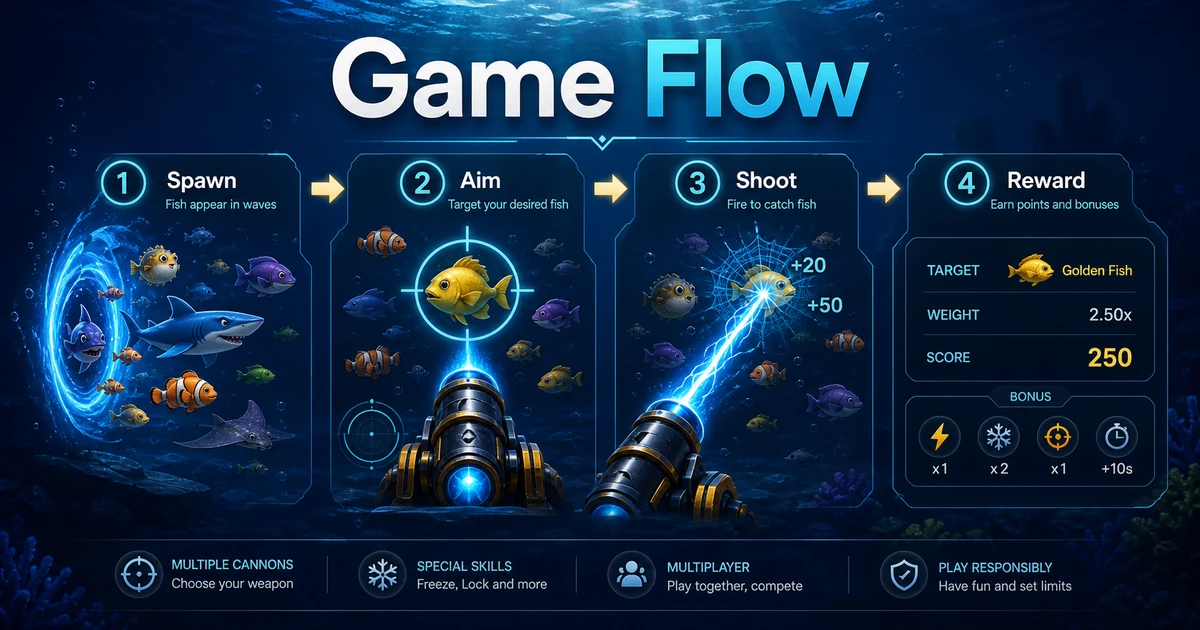
Fishing games follow a fast but understandable loop. Targets appear, users aim, shots are fired, and the screen gives feedback. Once beginners understand this loop, the game becomes easier to read and less confusing.
The basic game flow
Fish or sea creatures appear from different directions. Users aim at selected targets and fire using the available weapon or energy setting. The game then shows whether the shot affected the target and how the score or feedback changes.
Target values and resistance
Not all targets behave the same. Some may move faster, require more shots or appear during special moments. Beginners should avoid assuming that larger or brighter targets are always the best choice.
Target approach
| Small targets | Large targets |
|---|---|
| Easier to study movement | May require more focus |
| Useful for learning timing | Can distract beginners |
| Lower visual pressure | Often linked to feature moments |
Energy and pace
Shots, cannon strength or energy use affect the pace of play. Firing constantly can make the session feel fast and harder to control. A better approach is to aim deliberately and understand what the screen is showing.
Feature feedback
Some fishing games include power-ups, special weapons or boss fish. These are visual features, not promises. For a deeper look, read Fishing Game Bonus Features.
Frequently asked questions
What is the main fishing game loop?
Targets spawn, users aim, shots are fired and the screen provides score or action feedback.
Should beginners fire constantly?
No. Slower, deliberate play helps users understand the interface.
Are large fish always better targets?
No. Large targets may require more attention and should be approached carefully.
What does energy mean?
Energy or shot meters help users understand pace and resource use.
Where can beginners start?
Read the Fish Shooting Game Beginner Guide.
Next step
Use the ME88 Malaysia homepage for official navigation and keep arcade play within a fixed limit.